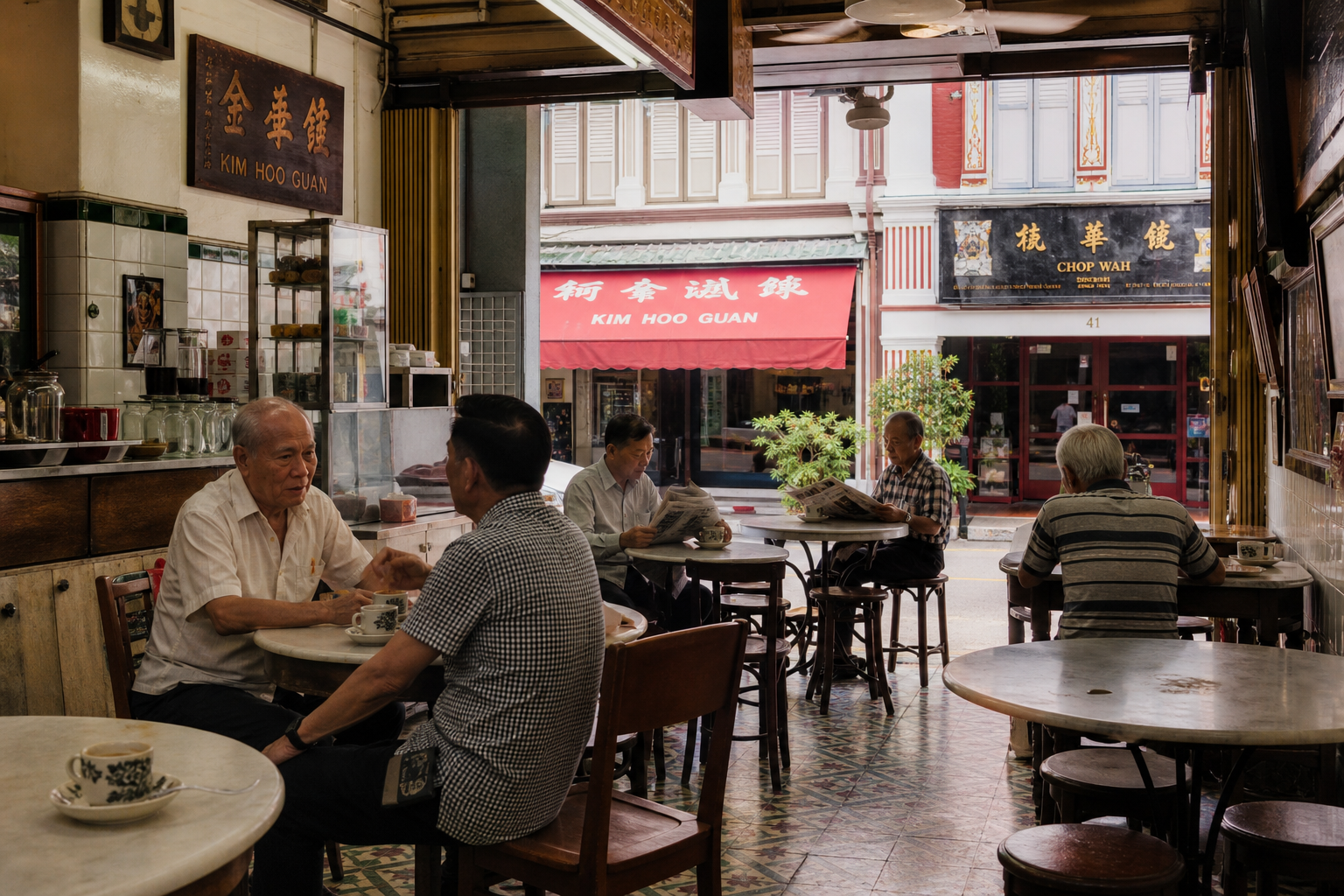
The uncle already knows my order before I reach the counter — kopi siu dai, soft boil if they have it, and he never asks twice. I come early on purpose, when the five-foot way on Smith Street still belongs to delivery crates and the shutter half-lifts of shops that will open in an hour. From the doorway the kopitiam looks like a photograph waiting for people: empty stools, fans turning, the radio low enough that I can hear spoons against ceramic.
I take the table near the window, not for the view — there is a parked van and a stack of plastic chairs — but for the ledge where I can set my notebook without elbowing anyone. The marble is cool through my sleeves. Someone has wiped it in circles that show when the light slants in. Kreta Ayer at this hour smells like toast, butter, and the faint metallic note of the kopi sock being rinsed.
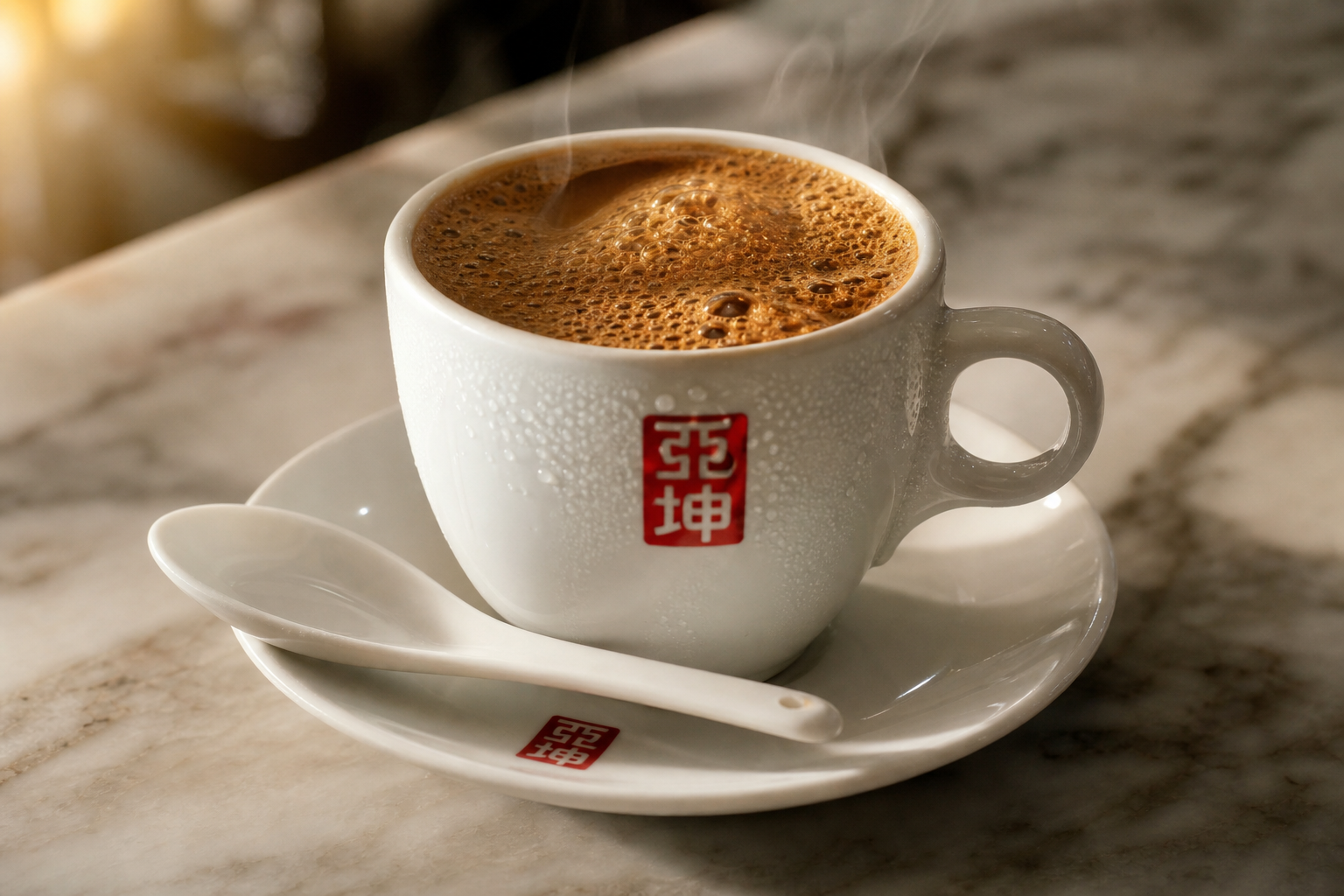
The first sip is always too hot and I pretend patience. Kopi siu dai should be sweet but not cloying; this stall gets it right more often than not. I watch the uncle move between tables with a cloth over his shoulder, refilling glasses of water nobody asked for. An auntie two tables over reads the Lianhe Zaobao without turning pages quickly. She has the whole place to herself except for me and a boy doing maths homework with fierce concentration.
Outside, a cleaner hoses the pavement in short bursts. Chinatown is not silent — it never is — but the sound has edges filed down. No tour groups yet, no loud bargaining over souvenirs. I can hear a bus air-brake on New Bridge Road and the clatter of metal gates going up one shop at a time. From here the high floors of the HDB blocks look far away, though I know they are only a walk toward Chin Swee.
I come for the interval more than the drink. My flat is quiet too, but it is my quiet — laundry, messages, the list of things I ought to do. Here the quiet is borrowed. Nobody needs anything from me except the right change. I write three lines about a dream I half remember, then cross them out because they sound borrowed from someone else's notebook.
By seven-thirty the frame shifts. Office workers in lanyards, a delivery rider scanning a phone at the counter, the uncle calling orders in a voice that fills the room. The five-foot way narrows as stools spill outward. I pay and step into the brightening street, cup empty, pockets correct. The kopitiam behind me is already someone else's morning.
I walk home the long way past the market shutters, still down, metal ribs catching the first hard light. My notebook has one usable sentence: the marble remembers every wrist that rested there. That is enough for today.